Which Religion Is Older Christianity Or Muslim
- Historical Origins of Christianity and Islam
- Key Figures in the Founding of Both Religions
- Religious Texts and Their Significance
- Spread and Development Through History
- Comparative Timeline of Major Events
Historical Origins of Christianity and Islam

Which Religion Is Older Christianity Or Muslim ? Christianity and Islam are two of the world’s largest religions, each with profound historical significance and deep cultural roots. To understand the historical origins of Christianity and Islam, we must delve into the timeline of their emergence and the socio-political factors that shaped their foundations.
Christianity emerged in the 1st century CE in the region of Judea, a province of the Roman Empire. It originated from the Jewish tradition, centering around the life and teachings of Jesus of Nazareth, a figure viewed by Christians as the Son of God and the awaited Messiah (Christ). Jesus’ teachings emphasized love, forgiveness, and the imminence of the Kingdom of God, which resonated deeply in a society ripe with spiritual yearning amidst Roman oppression. The events of his crucifixion c. 30-33 CE, followed by claims of resurrection, catalyzed his followers to spread his message beyond Jewish communities.
The pivotal moment for the spread of Christianity came with Paul of Tarsus. Initially a persecutor of Christians, his dramatic conversion experience led to extensive missionary work across the Roman Empire. His letters, later included in the New Testament, addressed emerging ecclesiastical issues and theological questions, thereby establishing a framework for Christian doctrine. By the end of the 1st century, Christian communities had flourished, particularly in cities like Ephesus, Antioch, and eventually Rome.
- Holy Quran Part 30 (JUZ AMMA) Book with English Translation (12 Pcs Lot)
- Dr. Mustafa Khattab (Author)
- English (Publication Language)
- 416 Pages - 12/26/2015 (Publication Date) - Message for Humanity (Publisher)
- Karroum, Bachar (Author)
- English (Publication Language)
- 129 Pages - 02/08/2023 (Publication Date) - GoodHearted Books Inc. (Publisher)
On the other hand, Islam originated over six centuries later, in the 7th century CE, on the Arabian Peninsula. The key figure in this major world religion is the Prophet Muhammad, who is regarded by Muslims as the final prophet sent by God (Allah). Muhammad began receiving revelations from Allah around 610 CE, which were later compiled into the Qur’an, the holy book of Islam. His messages called for monotheism and social justice, providing a stark contrast to the polytheistic practices prevalent in Arabia at the time.
By the time of Muhammad’s death in 632 CE, he had united much of the Arabian Peninsula under Islam, establishing a rapidly growing religious community. The next generations witnessed a remarkable expansion of Islamic rule, as caliphs—successors to Muhammad—led conquests that facilitated the spread of Islam across the Middle East, North Africa, and into parts of Europe and Asia.
The historical prominence of both religions is marked by their geographical and temporal contexts. While Christianity was initially a sect of Judaism, it rapidly developed its own identity, gaining significant ground in the Roman Empire despite periods of intense persecution. By the 4th century, Christianity was declared the state religion of the Roman Empire under Emperor Constantine, which further catalyzed its growth.
Islam’s expansion, fueled by early military conquests and the establishment of key centers of learning in places such as Baghdad and Cordoba, allowed it to absorb and integrate various cultural and intellectual influences. These developments not only enhanced Islamic theology but also contributed to advancements in science, philosophy, and the arts, setting the stage for the Golden Age of Islam.
In considering the question of “Which Religion Is Older: Christianity or Islam,” it becomes evident that while Christianity predates Islam by several centuries, both religions arose from rich historical narratives, responding to the spiritual and sociopolitical needs of their respective eras. This intricate tapestry of faith, community, and doctrine continues to shape religious identities and interfaith relations around the globe today.
As we continue to explore the key figures in the founding of both religions, we will uncover the profound impact these individuals had on their faiths and the lasting legacies they left behind.
- Holy Quran Part 30 (JUZ AMMA) Book with English Translation (12 Pcs Lot)
- Dr. Mustafa Khattab (Author)
- English (Publication Language)
- 416 Pages - 12/26/2015 (Publication Date) - Message for Humanity (Publisher)
- Karroum, Bachar (Author)
- English (Publication Language)
- 129 Pages - 02/08/2023 (Publication Date) - GoodHearted Books Inc. (Publisher)
Key Figures in the Founding of Both Religions

A pivotal aspect of understanding the emergence of Christianity and Islam lies in examining the influential figures who shaped these religions. The development of theology, practice, and community dynamics can largely be traced to the actions and teachings of notable individuals whose lives and legacies set the foundations for their respective faiths.
In Christianity, Jesus of Nazareth is undeniably the cornerstone figure. His life and ministry fundamentally transformed the religious landscape of the 1st century. Through parables and teachings that often challenged established norms, Jesus sought to reform Judaism from within, advocating for love, compassion, and inclusion. The narrative of his crucifixion and subsequent resurrection is central to Christian doctrine, signifying triumph over sin and death. The beliefs surrounding Jesus not only defined the faith but also sparked a movement that would rapidly spread across the Roman Empire.
Following Jesus, one cannot overlook Paul of Tarsus, whose contributions to Christianity were instrumental in its proliferation beyond Jewish confines and into Gentile populations. Paul’s epistles, addressing various communities and theological questions, laid the groundwork for much of Christian doctrine. His travels across the Mediterranean established a network of early Christian churches, making him one of the foremost missionaries of the faith. In doing so, he was pivotal in articulating the significance of Jesus as Christ, a distinction that garnered a vast following.
Conversely, in Islam, Prophet Muhammad serves as the final and most influential prophet, revered by Muslims as the messenger who communicated Allah’s will. His role was not just that of a spiritual leader; he also acted as a political and social reformer, facing the complexities of tribal Arabia. The revelations Muhammad received became the Qur’an, which serves as a comprehensive guide for Muslims on matters of faith, morality, and law. His establishment of the ummah, or community of believers, laid the foundation for a religion that would expand well beyond Arabia.
The leadership of the early caliphs, who succeeded Muhammad, was pivotal in the immediate consolidation and spread of Islam. Figures like Abu Bakr and Umar ibn al-Khattab played significant roles in unifying the Arabian tribes and extending Islamic influence through military expeditions and diplomacy. Their administrative strategies and governance fostered an environment where Islamic teachings could flourish and adapt to the diverse cultures within the expanding empire.
In considering the question “Which Religion Is Older: Christianity or Islam,” the key figures associated with each faith illustrate not only the unique characteristics that define them but also highlight their interconnections. The legacy of Jesus and Muhammad, and their respective followers, showcases the emergence of two vibrant traditions that would profoundly shape world history. Their teachings, while distinctive, resonate with common themes of justice, compassion, and spiritual seeking—elements that continue to inspire millions today.
Influence of Key Figures and Their Legacies
The importance of these key figures extends beyond their immediate teachings; their personal narratives interweave with the development of theology, liturgy, and community practices in both religions. Jesus’ parables, for instance, remain central to Christian teaching and worship, offering ethical guidance and reflections on human nature. His interpretation of the Jewish scriptures not only influenced the understanding of Judaism but also established a profound new theological trajectory that would birth Christianity.
Similarly, Muhammad’s example as a model for personal conduct is pivotal for Muslims. The Sunnah—practices and sayings of Muhammad—serves as a complementary text to the Qur’an, providing insights into practical aspects of living out one’s faith. His emphasis on social justice, charity, and community responsibility resonates throughout Islamic teachings and is reflected in the principles of Zakat (almsgiving) and community solidarity.
Both Jesus and Muhammad are central figures around whom their respective communities have developed elaborate celebrations, rituals, and traditions that reinforce the beliefs and identities of their followers. Christmas and Easter, celebrated in remembrance of Jesus’ birth and resurrection, speak to the celebratory nature of Christianity, while Eid al-Fitr and Eid al-Adha mark significant moments of thanksgiving and sacrifice in Islam, reflecting the community spirit.
Ultimately, by delving into the lives and teachings of these key figures, we gain a richer understanding of the historical and spiritual contexts from which these two blockbuster religions emerged. Their profound legacies continue to influence billions, shaping moral frameworks, cultural practices, and interfaith dialogues well into the modern world.
- Holy Quran Part 30 (JUZ AMMA) Book with English Translation (12 Pcs Lot)
- Dr. Mustafa Khattab (Author)
- English (Publication Language)
- 416 Pages - 12/26/2015 (Publication Date) - Message for Humanity (Publisher)
- Karroum, Bachar (Author)
- English (Publication Language)
- 129 Pages - 02/08/2023 (Publication Date) - GoodHearted Books Inc. (Publisher)
Religious Texts and Their Significance
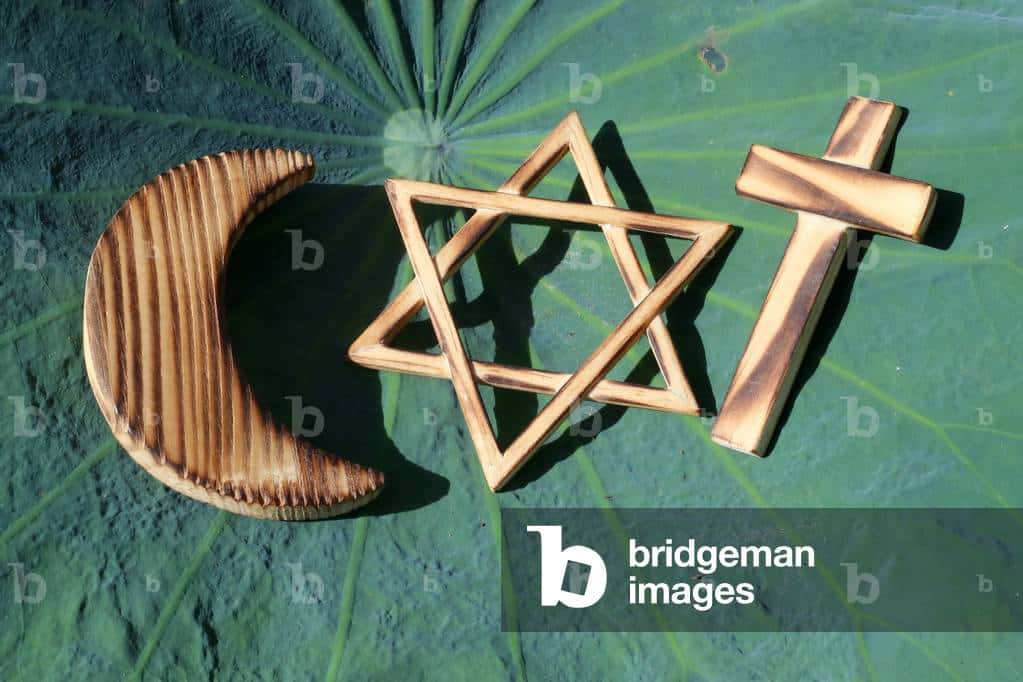

The foundational texts of Christianity and Islam carry immense significance, serving not only as sacred writings but also as the cornerstone of their respective faiths. Each religion’s scriptures reflect their theological principles, provide guidance for adherents, and encapsulate the spiritual and ethical dimensions of their beliefs.
The Christian Bible and Its Components
Christianity’s sacred text, the Bible, is a compilation of varied literary genres including history, poetry, prophecy, and letters. It is divided into two primary sections: the Old Testament and the New Testament. The Old Testament, shared with Judaism, chronicles the creation, the history of Israel, and God’s covenant with humanity. The New Testament, on the other hand, focuses on the life and teachings of Jesus Christ as well as the early Christian church.
The four Gospels—Matthew, Mark, Luke, and John—are pivotal as they narrate the life, ministry, death, and resurrection of Jesus. These accounts are fundamental to Christian doctrine, emphasizing Jesus as the Messiah and the embodiment of God’s love and salvation. Additionally, the Acts of the Apostles and the Epistles offer insights into the workings and teachings of the early Christian community, providing guidance on faith and conduct that continues to resonate with believers.
Here is a table that provides an overview of the Bible and its parts:
| Section | Description | Number of Books |
| Old Testament | Books that narrate the history and laws of the people of Israel | 39 |
| New Testament | Books detailing the life of Jesus and the early church | 27 |
| Total | Combined total of the sacred scriptures recognized by most denominations | 66 |
In considering the inquiry “Which Religion Is Older: Christianity or Islam,” it is crucial to acknowledge how early Christians revered their scriptures and shaped communities around them, establishing a tradition of interpretation and discussion that continues through the centuries.
The Qur’an and Its Significance in Islam
In stark contrast, the Qur’an holds a singular position in Islam as the literal word of God as revealed to the Prophet Muhammad. Comprising 114 chapters (surahs), the Qur’an is written in Arabic and is considered by Muslims to be the ultimate source of divine guidance and legislation. Its verses cover various aspects of life, including theology, morality, guidance for personal conduct, and legal principles.
The significance of the Qur’an extends beyond its content; it is also an integral part of Islamic worship. Recitation of the Qur’an is a cornerstone of Muslim prayer (Salah) and is performed in Arabic, regardless of the speaker’s native language. This practice fosters a sense of unity among Muslims worldwide, reinforcing a common identity.
The preservation and accurate transmission of the Qur’an have been a subject of immense dedication among Muslims throughout history. The process of memorizing the entire text, known as hafiz, symbolizes the profound respect for the Qur’an as a guiding force in a believer’s life.
Here’s a table summarizing key facts about the Qur’an:
| Feature | Description |
| Language | Arabic, considered the literal word of God |
| Structure | 114 chapters (surahs) of varying lengths |
| Preservation | Memorization and oral recitation are central to its transmission |
In the context of the discussion around “Which Religion Is Older: Christianity or Islam,” the distinct characteristics of their respective texts illustrate the nuanced differences in how followers engage with their scriptures. The Bible’s historical context and theological diversity contrast with the Qur’an’s singular divine origin and unified message, showcasing the unique and powerful ways in which the texts shape each faith.
These religious texts not only define the beliefs and practices of their adherents but also contribute significantly to the historical development and continuing evolution of Christianity and Islam as two of the world’s major religions. Understanding their significance is key to grasping the themes that have influenced countless generations and the continuing relevance of these traditions in today’s society.
Spread and Development Through History

The spread of Christianity and Islam reveals intriguing dynamics that shaped their development and influence across various regions and cultures. Following their respective origins, the trajectories of both religions are marked by rapid expansion and profound transformations driven by political, social, and economic factors.
Expansion of Christianity
Christianity began to spread notably through the efforts of early apostles and missionaries. After the death of Jesus, the apostles played a crucial role in evangelizing communities beyond Judea. The activities of Paul of Tarsus are particularly noteworthy. His extensive missionary journeys across the Mediterranean and his epistles laid the groundwork for establishing communities in diverse cities such as Corinth, Ephesus, and Rome. By the end of the 1st century, underground Christian communities were forming throughout the Roman Empire, often in response to persecution from both local governments and fellow Jews.
As Christianity continued to grow, it began to attract followers from various societal strata, including the marginalized and the intellectual elite. The Edict of Milan in 313 CE, issued by Emperor Constantine, marked a turning point for Christianity. It legalized the faith and facilitated its acceptance within Roman society, leading to the establishment of churches and the integration of Christian values into the empire’s governance.
Over the following centuries, Christianity transformed into the established religion of the Roman Empire, fundamentally altering its identity. The Council of Nicaea in 325 CE played a pivotal role in unifying Christian doctrine, addressing heresies, and solidifying the church’s authority. As a result, the religion became institutionalized with a structured hierarchy, leading to the formation of various denominations that reflect differing interpretations of Christian teachings.
Islam’s Rapid Expansion
Following Muhammad’s death in 632 CE, Islam experienced remarkable expansion facilitated by a combination of military conquests and the appeal of its message. The initial caliphs, such as Abu Bakr and Umar ibn al-Khattab, undertook campaigns that united the Arabian tribes and spread Islam into new territories. The Islamic conquests of the 7th and 8th centuries saw the religion reaching vast regions, including the Byzantine and Persian Empires, North Africa, and parts of Europe.
The establishment of the Umayyad Caliphate was instrumental in the spread of Islam. With its capital in Damascus, the Umayyad rule extended from Spain to India, promoting Arabic as the administrative language and facilitating the assimilation of diverse cultures under Islamic governance. This blending of cultures played a crucial role in the development of the Islamic civilization, known for its advancements in science, philosophy, architecture, and the arts.
Alongside military expansion, trade routes established by Muslim merchants further contributed to the spread of Islam. The religion’s teachings on ethical conduct, charity, and community involvement resonated deeply with many, drawing converts in regions far removed from Arabia. By the 10th century, significant Islamic centers such as Baghdad, Cairo, and Cordoba had emerged as pivotal hubs of learning and culture within the Islamic world.
Interplay Between Christianity and Islam
The historical trajectories of Christianity and Islam also intersected as they spread. Both religions encountered and interacted with one another during various periods, leading to cultural exchanges and, at times, conflicts. The Crusades, a series of military campaigns initiated by Christians between the 11th and 13th centuries, aimed to reclaim Jerusalem and other holy sites from Muslim rule, significantly impacting both faiths.
In contrast, periods of peaceful coexistence fostered mutual influences, especially in regions under Islamic rule. Scholars of both faiths engaged in dialogue, sharing knowledge in areas such as philosophy, science, and the arts. This interchange of ideas played a pivotal role in flourishing intellectual movements, including the Renaissance in the West, which drew on works preserved and translated by Muslim scholars.
As scholars explore the historical contexts of “Which Religion Is Older: Christianity or Islam,” it is crucial to recognize that the spread of these religions was not merely a function of conquest or conversion but encompassed complex interactions with varied sociopolitical landscapes, cultural identities, and spiritual aspirations.
While Christianity and Islam emerged in distinct historical contexts and followed different paths of development, the interwoven histories of their expansion provide insights into the ways both religions shaped and reacted to the world, influencing countless lives while continuing to resonate in modern times. The ongoing dialogues and exchanges between these faiths highlight their enduring relevance in understanding global societal dynamics today.
Comparative Timeline of Major Events

The periods of significant events in the histories of Christianity and Islam illustrate their respective journeys of growth, transformation, and divergence. Understanding these timelines sheds light on the question, “Which Religion Is Older: Christianity or Islam,” while highlighting pivotal moments that shaped each religion’s identity.
In the 1st century CE, Christianity began to take root following the death and resurrection of Jesus Christ, a transformative epoch marked by events such as the Pentecost in 30 CE, when the Holy Spirit descended upon the apostles, empowering them to spread the teachings of Christ. The subsequent decades saw the establishment of churches across the Roman Empire, a trend solidified through the spread of letters and teachings from Paul of Tarsus. By the end of the 1st century, the faith had gained a foothold in major urban centers, with Christianity slowly beginning to gain recognition despite periods of persecution.
Fast forward to the 4th century, and Christianity saw a dramatic change when Emperor Constantine issued the Edict of Milan in 313 CE, granting religious tolerance to Christians and legitimizing the faith within the Roman Empire. This shift not only allowed for the open practice of Christianity but set the stage for the Council of Nicaea in 325 CE, which addressed key doctrinal disputes and united the faith under a more structured ecclesiastical hierarchy. By the end of the century, Christianity was firmly established as the state religion, leading to an influx of conversions and the construction of monumental basilicas.
On the other hand, Islam’s formative years in the 7th century CE were marked by the life of Prophet Muhammad. Following his first revelation in 610 CE, Muhammad began preaching monotheism, initially facing persecution in Mecca. His migration to Medina in 622 CE, known as the Hijra, marked a significant turning point, where the Muslim community began to thrive. The establishment of the first mosque and the political and social cohesion of the community laid the foundation for what would become a rapidly expanding religion.
The conquests following Muhammad’s death in 632 CE—led by his successors, known as the caliphs—ushered in a robust era of expansion. By the end of the 7th century, the Islamic empire stretched from Spain in the west to India in the east. The Battle of Yarmouk in 636 CE and the subsequent conquests of the Byzantine and Persian empires were crucial moments that facilitated a widespread dissemination of Islamic teachings and practices.
As we progress into the 8th century, the establishment of the Umayyad Caliphate brought about an era of cultural and intellectual flourishing. Cities like Damascus and later Baghdad became centers for education, scholarship, and the arts, reflecting the dynamic interplay of diverse cultures within the Islamic world.
Comparatively, the 11th century heralded the Crusades, a series of religious wars initiated by Christian forces aimed at reclaiming the Holy Land from Muslim control. These interactions between Christianity and Islam, marked by conflict but also cultural exchange, significantly influenced the development of both religions.
In the centuries that followed, the Protestant Reformation in the 16th century marked another pivotal event for Christianity. It resulted in the fragmentation of the church and the emergence of various denominations, shifting the religious landscape in Europe.
Simultaneously, the Islamic world faced challenges as well, including the rise of the Ottoman Empire, which would eventually usher in a new phase of Islamic governance and cultural contributions. The diversity of thought and practice within Islam continued to grow, impacting millions across different regions.
The timelines of significant events in both religions reveal a rich tapestry of interactions, adapting to and influencing the world. This historical context enriches the discussion of “Which Religion Is Older: Christianity or Islam,” showcasing both the profound heritage of Christianity starting in the 1st century and the rapid establishment of Islam emerging in the 7th century. As these faiths continue to evolve, their shared history informs contemporary dialogues on faith, culture, and identity worldwide.








Post Comment